

Knee pain is often dismissed as a normal part of aging or the result of a busy lifestyle. However, persistent discomfort may be an early sign of knee osteoarthritis (OA)—one of the most common joint conditions affecting adults. Recognizing the symptoms early can help slow disease progression, reduce pain, and maintain an active lifestyle.
What Is Knee Osteoarthritis?
Knee osteoarthritis is a degenerative joint disease in which the protective cartilage between the bones gradually wears away. As the cartilage becomes thinner, the bones rub against each other, causing pain, stiffness, and reduced mobility. Although it is more common in people over 50, younger adults can also develop osteoarthritis due to obesity, previous knee injuries, or repetitive stress on the joints.
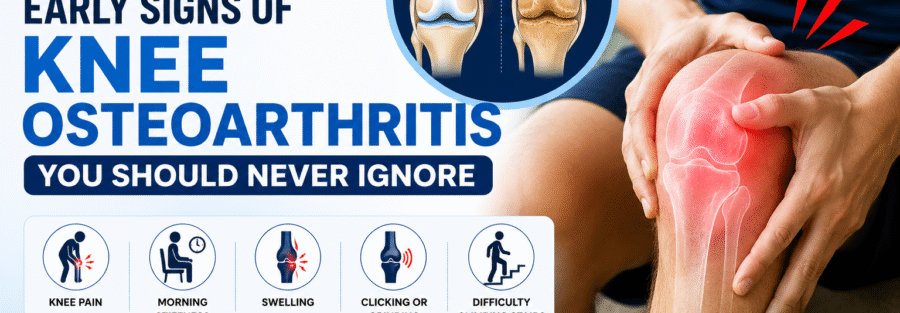
Early Signs You Should Never Ignore
1. Persistent Knee Pain
If your knee hurts during walking, climbing stairs, or even after sitting for a long time, don’t ignore it. Pain that keeps returning is one of the earliest warning signs of osteoarthritis.
2. Morning Stiffness
Feeling stiffness in your knee after waking up or after prolonged sitting that lasts for a few minutes may indicate early joint degeneration.
3. Swelling Around the Knee
Mild swelling after physical activity can occur when the joint becomes inflamed due to cartilage wear.
4. Clicking or Grinding Sounds
A clicking, popping, or grinding sensation while bending the knee may occur as the smooth cartilage surface begins to deteriorate.
5. Difficulty Climbing Stairs
Many people notice knee pain while climbing or descending stairs before experiencing discomfort during normal walking.
6. Reduced Flexibility
If you find it difficult to fully bend or straighten your knee, it could be an early indication of osteoarthritis.
Who Is at Higher Risk?
You may be at greater risk if you:
- Are over the age of 50
- Are overweight or obese
- Have had previous knee injuries
- Participate in high-impact sports
- Have a family history of osteoarthritis
- Perform repetitive knee movements at work
Can It Be Prevented?
While osteoarthritis cannot always be prevented, you can reduce the risk and slow its progression by:
- Maintaining a healthy body weight
- Exercising regularly with low-impact activities like walking or swimming
- Strengthening the muscles around the knee
- Wearing supportive footwear
- Avoiding prolonged stress on the knees
- Seeking medical advice when symptoms first appear
When Should You See an Orthopedic Specialist?
Consult an orthopedic doctor if:
- Knee pain persists for more than a few weeks
- Swelling becomes frequent
- You experience difficulty walking or climbing stairs
- The knee feels unstable or locks during movement
- Pain affects your daily activities or sleep
Early diagnosis through clinical evaluation and imaging, if needed, can help you manage osteoarthritis effectively with lifestyle changes, physiotherapy, medications, or other treatment options.
Final Thoughts
Ignoring early knee pain may lead to worsening joint damage over time. Paying attention to the warning signs and seeking timely orthopedic care can help you stay active, independent, and pain-free for longer.
If you’re experiencing persistent knee discomfort, don’t wait until it becomes severe. Early treatment often leads to better outcomes and helps preserve your joint health.